Pink CO₂ Dot
The recognizable public mark.
The Pink Dot appears on exact products, components, bags, carts, or back-of-house streams that belong in a managed carbon recycling system. It can also tell users when to donate, separate components, check site rules, or avoid the stream entirely.
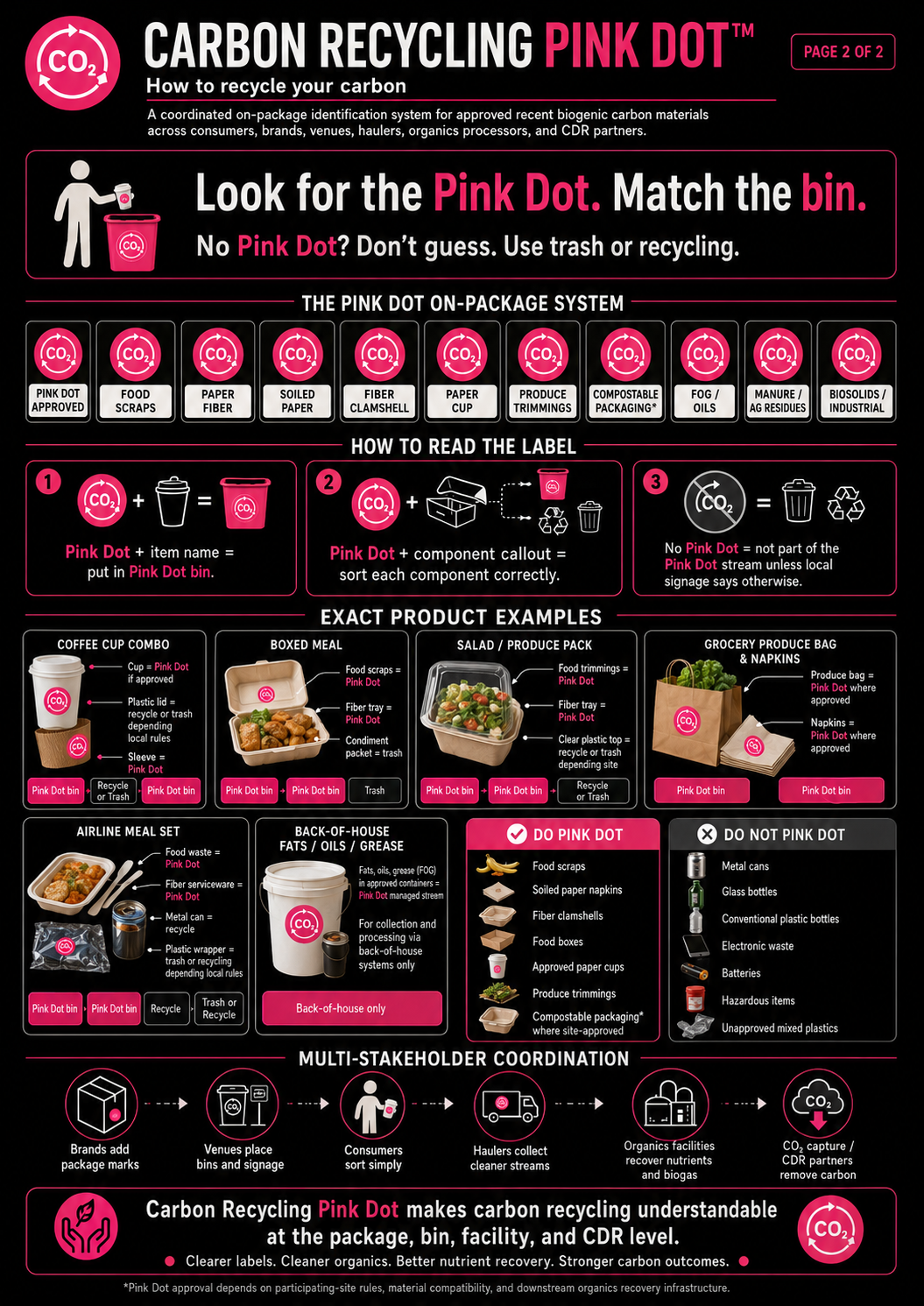
The label system uses simple overlays focused on carbon recovery eligibility: food scraps, leftovers, paper fiber, soiled paper, pizza boxes, molded fiber, compostable packaging where approved, FOG, biosolids, ag residues, and other site-approved feedstocks.
The recognizable public mark.
Pink Dot Bin, Pink Bag, Check Site, Donate First, Separate Components, Back-of-House Only, or Not Pink Dot.
Food Scraps, Edible Surplus, Soiled Fiber, Pizza Box, FOG, Biosolids, and more.
Cup, lid, sleeve, tray, liner, napkin, food residue, bag, film, wrapper, box, or grease container.
Donate if edible, remove lid, no liquids, keep loose, use pink bag, back-of-house only, or check signage.
 Donate FirstEdible SurplusPink Dot BinFood ScrapsPink Dot BinPizza Box / Soiled FiberPink BagControlled CollectionBack-of-House OnlyFOG / Oils
Cup: Pink Dot where approved
Sleeve: Pink Dot
Plastic lid: recycle or trash depending site
Clean top: recycle where accepted
Greasy bottom: Pink Dot where approved
Plastic sauce cup: trash or local recycling
Donatable sealed meal: donate first where allowed
Food scraps: Pink Dot
Fiber tray: Pink Dot
Condiment packet: trash
FOG: managed collection
Container: back-of-house only
Public bin: not allowed