Put carbon recovery instructions directly on the package.
Submit specs, identify eligible components, receive Pink Dot label guidance, and reduce consumer guessing at the source.
A label, bag, signage, and site-protocol system for turning approved recent-biogenic residuals into cleaner feedstock supply chains for compost, AD, gasification, HTC, HTL, pyrolysis, SAF, diesel, biocrude, materials, nutrients, CO₂ capture, and CDR-ready pathways.
Public rule: Look for the Pink Dot. Match the bin, bag, or site instruction.
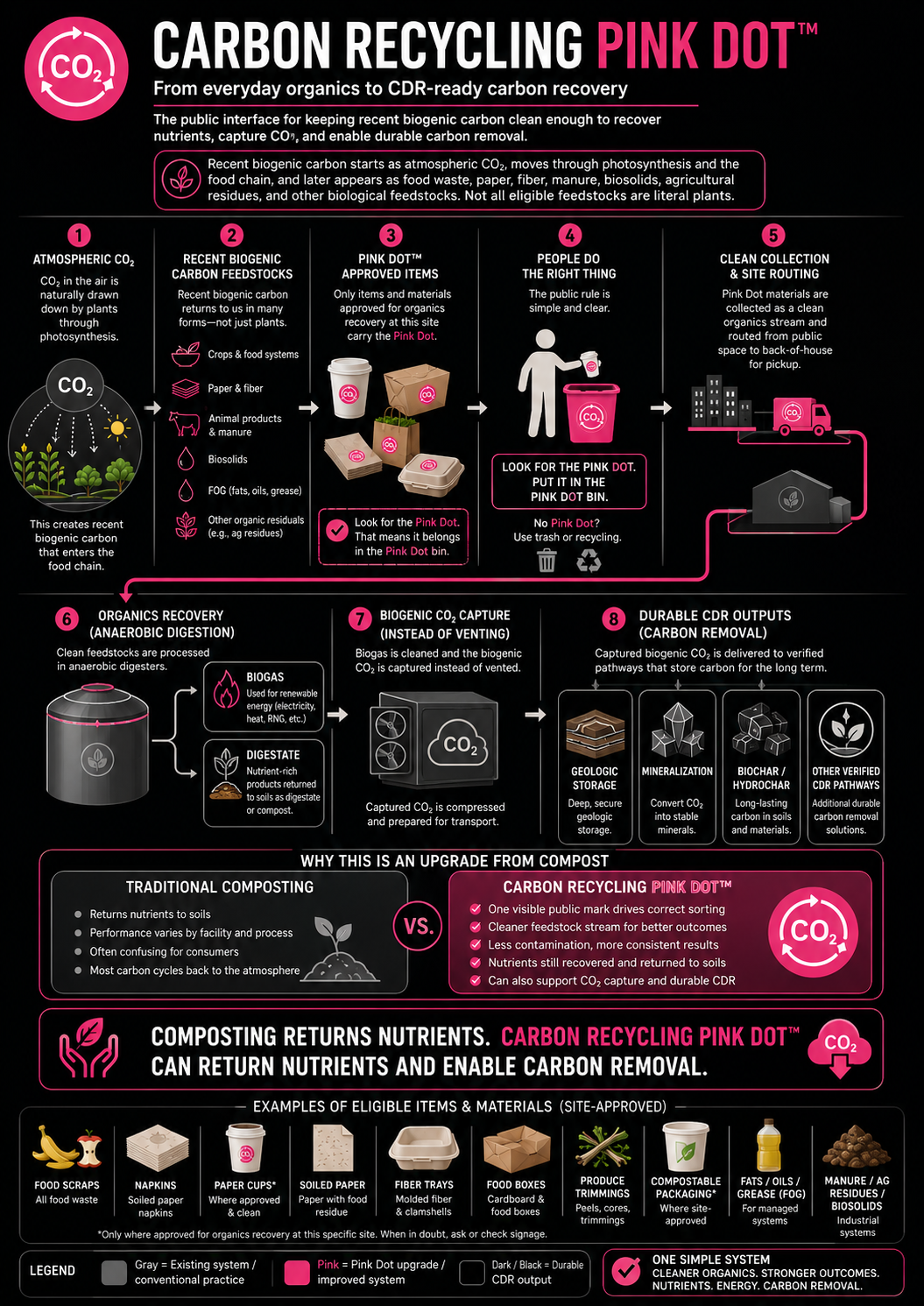
Composting remains valuable. Donation and edible food recovery should come first where applicable. But once material becomes a residual, the Pink Dot system helps identify, separate, bag, route, and measure the stream so each site can send it to the best available end use: nutrients, energy, fuels, materials, carbon products, CO₂ capture, or durable carbon removal.
A visible pink CO₂ dot identifies approved items, components, and streams.
Start with labels, stickers, pink bags, signage, and existing bins before adding new infrastructure.
Route to compost, AD, gasification, HTC, HTL, pyrolysis, fuels, materials, nutrients, or CDR.
Prioritize airports, QSRs, schools, campuses, grocery, stadiums, and other managed environments.
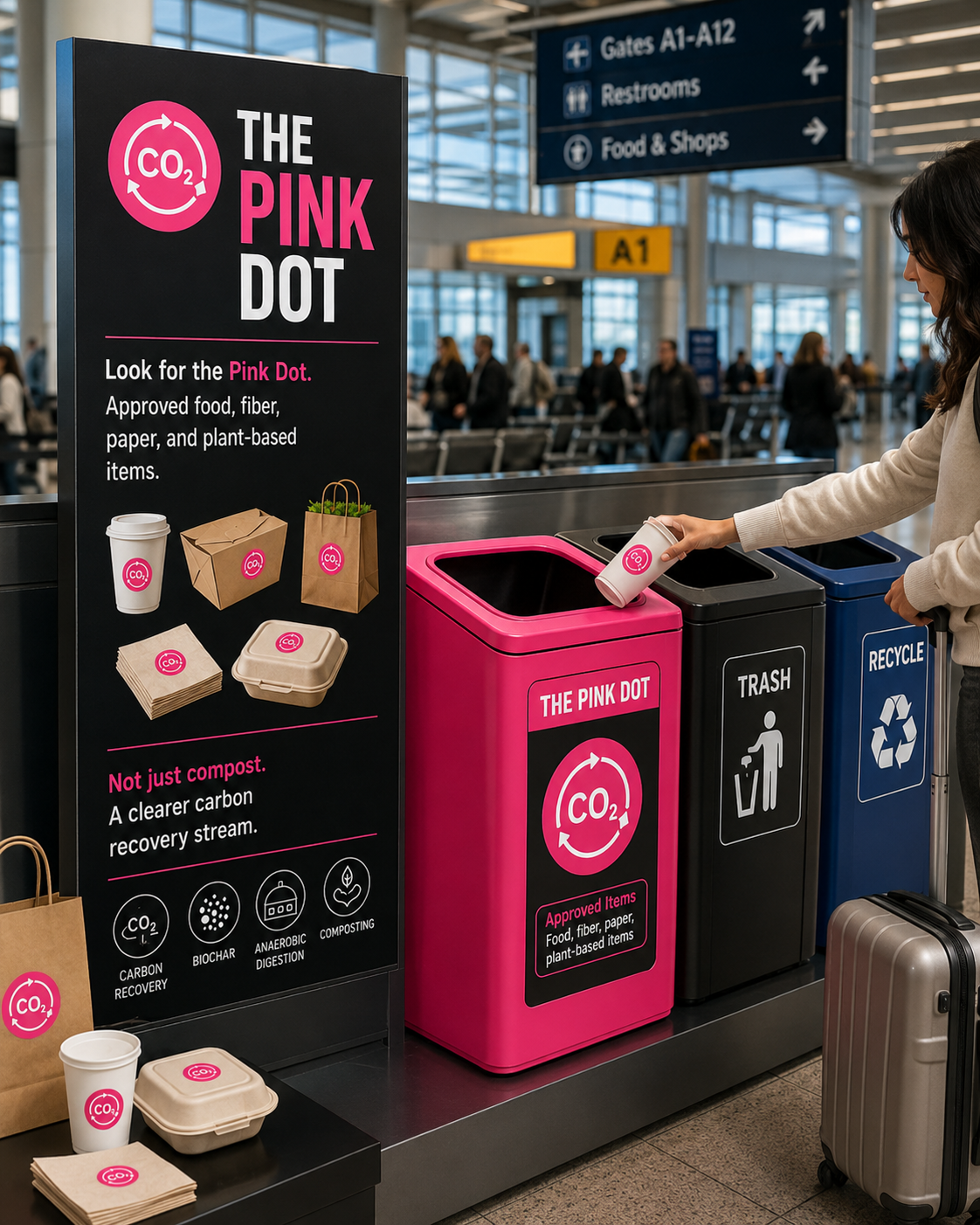
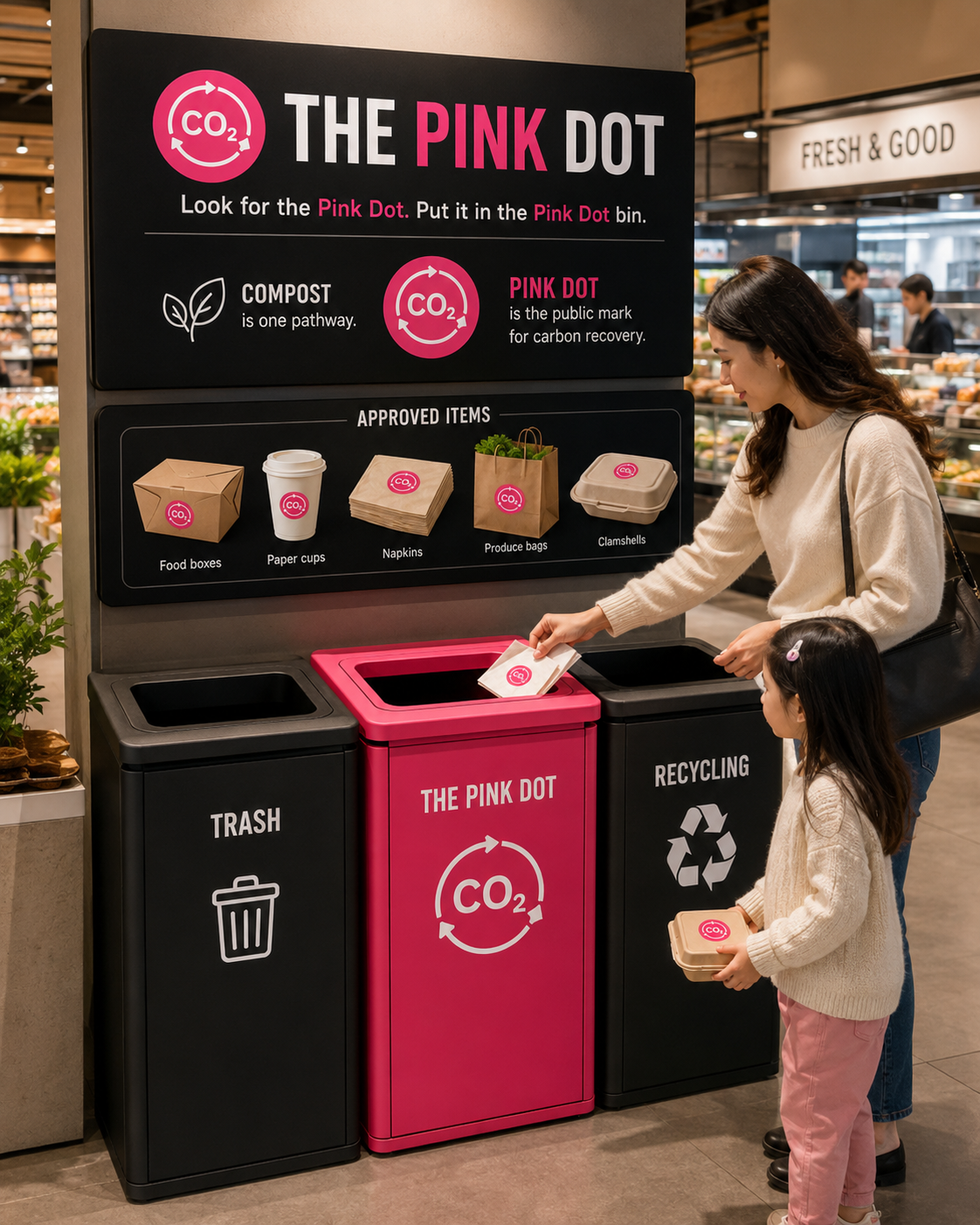
Submit specs, identify eligible components, receive Pink Dot label guidance, and reduce consumer guessing at the source.
Align fiber, food-serviceware, coatings, compostables, bio-based materials, and components with downstream recovery specifications.
Prepared foods, produce, cafés, pizza boxes, paper fiber, FOG, and back-of-house prep waste can be mapped into one coherent site system.
Cups, sleeves, napkins, food boxes, pizza boxes, fiber trays, scraps, leftovers, grease, and exclusions can be marked at the item/component level.
Use labels, Pink Dot stickers, pink bags, signage, carts, and existing bin stations before major capex or new permanent infrastructure.
Pink Dot bags, bin overlays, route-level labels, contamination audits, and destination records create a better handoff from public space to processors.
Clean streams can support AD, gasification, HTC, HTL, pyrolysis, composting, biocrude, SAF, diesel, RNG, biochar, nutrients, and materials.
Municipal systems, climate programs, carbon buyers, fuel buyers, material buyers, and registry partners can coordinate around one visible consumer interface.