Recent biogenic carbon
CO₂ moves through photosynthesis, food chains, paper, fiber, crops, animals, biosolids, FOG, and other biological systems.
Carbon Recycling Pink Dot starts before residuals become mixed. The public sees one mark; the operator maps local rules, donation hierarchy, approved materials, collection method, hauler route, processing technology, and product or carbon outcome.
CO₂ moves through photosynthesis, food chains, paper, fiber, crops, animals, biosolids, FOG, and other biological systems.
Edible surplus and donatable food should be handled according to local food recovery rules before scraps enter recovery streams.
Food scraps, leftovers, pizza boxes, fiber packaging, soiled paper, FOG, and other approved feedstocks receive site-specific instructions.
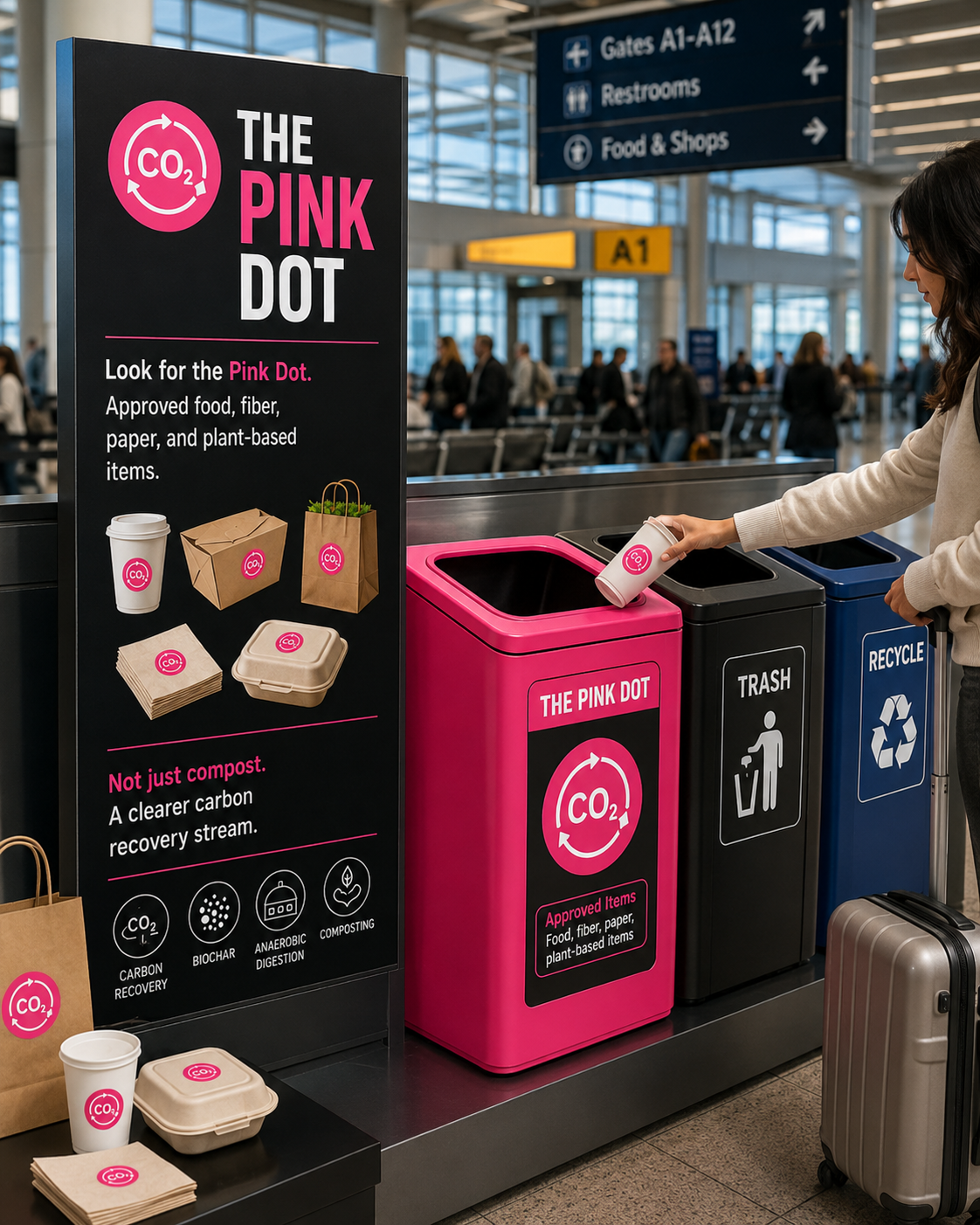
Look for the Pink Dot. Match the bin or bag. No Pink Dot? Use site signage, trash, or recycling.
Use stickers, labels, pink bags, signage, cart overlays, and existing bin stations before new infrastructure is required.
Separated streams are routed by material quality, local rules, facility specs, and highest-value end use.
AD, composting, gasification, HTC, HTL, wet or dry pyrolysis, fermentation, rendering, or novel biowaste conversion can be selected.
Outputs may include nutrients, soil products, RNG, syngas, SAF, diesel, biocrude, biochar, materials, CO₂ capture, and verified CDR.
Prioritize donation, food recovery, resale, staff meal, or local food rescue pathways where safe, lawful, and operationally feasible.
Not ordinary Pink Dot public-bin material.Customer plate waste, kitchen prep scraps, expired prepared food, and non-donatable leftovers can enter Pink Dot recovery where approved.
Pink Dot Bin or back-of-house route.Pizza boxes, napkins, molded fiber, paper serviceware, and food-soiled paper can be accepted where compatible with the selected pathway.
Site-approved only.FOG and liquid organics should generally be controlled back-of-house, not through public bins, and routed to managed recovery systems.
Back-of-house only.The system can work before a site installs brand-new bins. Early pilots can use Pink Dot package marks, stickers, shelf signs, counter signs, bin decals, pink collection bags, cart overlays, staff scripts, and QR-based site rules.